>It was too good to be true.

>The honeymoon’s over.

The boys’ bathroom pass has disappeared. I don’t want to know where it is.
Two of “my” boys got detention yesterday. Another ended up in Homework Room for his nonstop mouth in class.
I caught two girls trading clothes with each other in the bathroom at recess.
No one noticed that the flag directly outside our window was at half-mast, but when the 5th graders took the flag down, half the class ran to the windows and wouldn’t come back!!

What next?! No, don’t answer that.

Share and Enjoy !

Shares

>How can I be overdrawn? I still have checks left!

>Another envelope arrived in my school mailbox today, this one promoting a financial management curriculum for elementary schools. Apparently banks and credit unions will often pay for the curriculum materials if they know someone local will teach it.
Our instructional minutes are limited, very limited, largely because of standardized testing necessary to meet federal laws. I usually toss envelopes like this straight into the recycling barrel, but this one caught my eye.
At what age can children learn about money? How much should they learn, and when? What kinds of tools can parents use to teach about money: allowances, lemonade stands, savings accounts, Certificates of Deposit and money market accounts?
Schoolchildren learn about money in math class as early as second grade. But do they really understand interest? Mortgages? Loans in general? Credit Ratings?
If I asked (or even if I didn’t), my students could probably sing the clever jingle to the Free Credit Report web site. But do they know what credit is or what it means? At age 10, I doubt it.
However, it’s not too soon to teach kids the value of money. Many of my students are from poor families; our school qualifies for several grants and programs that serve disadvantaged families. Every year at least two or three in my class are homeless. Allowance? Forget it; these are families investing every meager penny into putting food on the table and getting to work.
We teachers are then faced with a tough job; how to teach the value of money to children who have none.
Our local high schools added a personal finance course to the graduation requirements a few years ago. In Amigo’s Work Experience class they have the option of opening a credit union account at the institution with a satellite office in his school commons. La Petite, now in her senior year of college, ran a lemonade stand at age 8 and started independently managing her own checking account around age 16. If Amigo thinks he’s ready, opening a credit union account of his own would be a good idea.

Parent Bloggers Network teamed up with Capital One to sponsor this blog blast. Capital One now has an interactive site called Moneywi$e Learning Tool that helps families learn about money management.

Share and Enjoy !

Shares

>Energize!

>Politics energizes me.

Let me rephrase that. Political activism energizes me. Talking with people who share my passion for teaching energizes me. Putting the two together makes me feel like yes, we can make a difference.
Social issues. Economic conditions. Budgets.
The cycle continues.
Social issues: Students without role models, without support, living in homes where normal is what most would call dystfunctional.
Economic conditions: children without crayons, children without lunch, children without homes.
Budgets: Inflation pushes costs higher and higher, operating budgets stay the same, and teachers are left to do more and more with less and less.
Social: child misses school frequently due to head lice
Economic: family can’t afford to buy the chemicals and wash the bedding and clothes
Budgets: School secretary has to continually check the child’s head because there is only a nurse in the building once a week for half a day.
Social Issues: Children determined to succeed
Economic conditions: Children in poverty, unable to buy materials
Budget: Class sizes get larger and larger because the districts can’t afford to pay enough teachers

And so on, and so on, etcetera, etcetera.

The saddest part of the cycle is the potential result, the results we keep fighting and fighting one day at a time, one child at a time. When we look at today’s second graders, we see the graduates of ten years in the future. We teachers know that when these little kiddos grow up, they’ll need to know how to read, write, handle basic math, interact with others, and much, much more.

We know, we teachers do, that no one can look today’s second graders in the eye ten years from now and say, “Gee, we’re sorry we didn’t teach you all you need to know, but y’know, the economy was bad, we did our best.”

Education can’t go into an economic slump; today’s second graders need more skills, not fewer skills, to succeed in a world where the future is just not certain. Budgets are tight, and we’ll keep pinching pennies, but before my thumbs start to imprint Abraham Lincoln, please realize: this cycle affects everybody. That’s why, my dear readers, I’ll continue to be politically active.

It energizes me because I know those in office hold a lot of power.

I’ll keep putting my energy toward electing those who will make the right decisions on social issues, economic conditions, and budgets, because all of those directly affect education.

And education can’t slump, or the cycle will continue.

This is a reprint of a guest post on PunditMom.

Share and Enjoy !

Shares

>Lesson plans and recipes

>On the night before Amigo started school, the night before my own Open House, two nights before my students were due in the room, I did what I do under pressure: I went into the kitchen. It was too hot to bake (zucchini bread, I’m ready!), so I worked on planned-overs instead. Planned-overs, for the uninitiated, are leftovers created on purpose.
Example: Beef and bean burritos are delicious. The original recipe came from a mom with seven kids. Seven! So I cut the recipe in half and still have leftovers. The leftovers become huevos rancheros, scrambled eggs topped with a substantial spoonful of beef/bean mix and a dollop of sour cream or grated cheddar (Don’t worry, Amigo, yours didn’t have cheese or sour cream).
On Labor Day I labored in my classroom from 7:00 AM until 11:00 and then gave up in the heat. I packed my schoolbag and headed home to A/C comfort. After a few hours of schoolwork on the computer (and Twitter and Plurk and browsing the MOMocrats latest reactions), I made supper. But while I was in the kitchen, the “Oh, no, it’s school time and I won’t have a chance to cook and everyone needs lunches and whatever will we do” panic set in. It’s okay. I can cope.
Today’s solution:
While grilling superburgers for supper, grill hot dogs for the fridge and freezer.
While simmering baked beans on the stove, brown a pound of ground beef for tacos or sloppy joes later.
While outside tending the fire, harvest the latest batch of spinach.
While the food is cooking, soak and rinse the fresh spinach. Tear it, place it in steamer, and while blogging (Ha! you knew that would be on the list), let the spinach cook. Place cooked spinach in small containers in the freezer for an incredible addition to a winter soup.
Somewhere in this time period, I diced a batch of wax beans for the freezer as well.
Belinda at NinjaPoodles put away enough to feed an army, it seems, or at least a growing kindergartener. I’m not in her league, but I do have a good batch of yummies ready for later.
Next: crockpot tomato soup, perhaps.
And while the spinach cools, make desk tags for the class.

Share and Enjoy !

Shares

>Martha Stewart definitely wouldn’t make this one

>Black Bean and Beef Burritos — well, it started that way.

1 lb. ground beef
I have that.
1 clove garlic
1/4 onion, diced
So far, so good.
1 15 oz. can black beans
In the pantry: can do.
1 cup jarred salsa
We’re out of salsa? When did that happen?
1 package flour tortillas
Okay, the package LOOKED full. I didn’t realize there were only two tortillas in it.
1 tsp. ground cumin
shredded cheese to taste

Based on the recipe and the actual ingredients present in my kitchen, here’s how it went.
Chop the onion. Saute until clear. Add ground beef and minced garlic. Stir and simmer until browned.
Drain beef. Return to pan.
Add beans.
Now here we go with the creative additions.
Add taco seasoning, 3/4 cup water, and 1 can diced tomatoes. (We didn’t have salsa, so this would have to do.)
Start water for….(drumroll)…. pasta. Yes, pasta. Why not? Martha Stewart doesn’t live here.
Add spices (cumin and a little chili powder: All right, already! I didn’t list chili powder in the ingredients! It wasn’t on the original, okay?!)
Simmer beef and bean mixture. Let it thicken while the pasta cooks. I used angel hair spaghetti. Yes, I did.

Reaction from La Petite: “What taste should I expect when I eat this? Mexican or Italian?”
She added parmesan cheese.
Husband added grated cheddar.

I called it Spaghetti Mexicana.

Share and Enjoy !

Shares

>"Are you watching the convention in Denver?"

>”I’m still getting over Hillary.”

Spoken by a teaching colleague, one with whom I’m so alike that I’m not sure we weren’t twins in a previous life, this statement started my afternoon on the first day back to school.

Political talk is an under the table kind of thing in schools. We shouldn’t use email for anything election-related, actively campaign, visibly support candidates while on school property, or even discuss politics if we might be overheard by parents or community members.

You know how I feel about the word “should.” Should, of course, is a bogus concept.

The reality: we quietly discuss politics among ourselves. We teachers often become politically active outside the classroom, put up signs at home and bumper stickers on our cars. We attend meetings, make donations, interview candidates in the name of our professional association, and we write letters. We write blogs!!

So when I saw our congressional representative outside the building shaking hands as more than 1,500 teachers and other school staff walked into our opening day meeting, I smiled. No, I more than smiled. I walked up to him, shook his hand, and thanked him for running for re-election. I wished him good luck in November because we need him in office.

In another hushed hallway conversation, a union rep and I talked about the need to have pro-education people in office at the local, the state, and the federal level. Like it or not, teaching is political. Decisions in Madison, decisions in Washington, and decisions made at City Hall affect the what we teach and how we teach it.

I could go on for a long, long time with a list of examples, but I have desk tags to make and a charter school board meeting tonight. So in closing, here’s a Should to summarize.

Teachers should be able to teach without politics.

Reality: Education is political. It is often driven by public perception. Government decisions affect everything we teach.

End result: Teachers need to be politically active. In order to be effective advocates for children, teachers need to vote for pro-education candidates. And in order to elect pro-education candidates, well, teachers need to step out of their classrooms and …. well, you know the rest.
Share and Enjoy !

Shares

>Back to school, back to crockpot with chicken, spinach, and tomato casserole

>During the school year I use my crockpot at least once a week. It gives me a chance to cook from scratch, avoid preprocessed garbage, and add a few vegetables into our diets — all without struggling through a complicated process after teaching all day. I’ve added to my collection over the summer with help from Stephanie at A Year of Crockpotting and other crockpot aficionados in the blogosphere. The original version of this recipe came from Chris at Ordering Disorder, her blog at Work it! Mom. I’ve added a few twists to it, of course. (FYI: I don’t teach straight from the textbook, either.)

Chicken, Spinach, and Tomatoes Served with Spaghetti

2 chicken breasts
2 tsp Dijon mustard
2 packages (8 ounces each) baby spinach, or 1 pound washed and dried fresh spinach leaves
2 cans diced tomatoes, drain liquid
small onion, thinly sliced
1/4 cup diced green pepper
herbs as desired (I used a little fresh basil and thyme)
a splash balsamic vinegar
1 lb spaghetti, or preferred pasta

Thoroughly wash spinach.
Toss chicken breasts into the crockpot. (I diced the chicken first)
Drop the mustard on top of the chicken.
Put all the spinach on top of the chicken. Squash it down to make it fit. The spinach will shrink in the cooking process.
Let cook for about 5-6 hours.
About 20 minutes before serving, fill spaghetti pot with water and set to boil.
Open up and drain the cans of diced tomatoes. Dump them into a skillet. Add the balsamic vinegar and onion.
Saute it for a few minutes, until most of the excess liquid is gone.
Scoop out the chicken and spinach from the crockpot and add to the tomatoes. Mix it all up and allow to simmer on low while the pasta cooks. Stir often.
Add some freshly grated Parmigiano-Reggiano on top. La Petite suggested feta cheese; that sound delicious to me. Next time, feta cheese it is!

Notes:
My spinach came from the garden. It was quite fresh, and the aroma from the crockpot was very strong. The end product, however, was delicious.
Consider rice or couscous instead of spaghetti or pasta.
MidCentury Modern Moms has also been posting on the Back to School theme. No new little preschoolers or kindergarteners there; we’re dealing with teens, college kids, IEPs, ACTs, SATs, GPAs, and more!

Share and Enjoy !

Shares

>Frustrating day with random blatherings

>I want to be at school working in my room. Instead, I’m stuck here.

Phone tag! I left messages for local pediatrician and for specialist in Milwaukee. Now I need to wait for their callbacks. My cell phone is nowhere to be found – I think I left in in Husband’s car when we came home from Miller Park last night. That puts out the trip to school and any other errands because I can’t. miss. these. calls.

So I wait. And wait. And get more and more restless.

I scavenged enough late summer rhubarb for rhubarb upside down cake, which led to adding lots of goodies to the compost bin. Upside down cake is delicious; compost now has a layer of eggshells (crushed), banana peels from lunch, and rhubarb leaves on top of half a dozen corn husks.

I cleaned the kitchen (again, still, again) and ran the dishwasher.

I want to weed the garden and pick beans, but I can’t leave the house for too long because the doctors’ offices might call. If I miss either call, it’ll take hours to get back in touch.

Errands that remain undone: post office, mail books for paperbackswap.com. Walgreens, to buy strapping tape because I used the last of it to mail the paperbacks.

Outdoor chores that remain undone: Pick beans. Pick tomatoes. cut off spotted leaves on tomato plants before blight spreads. Water hollyhocks and rhubarb and anything else that needs it. Weed south side of the house; clover is taking over. Harvest spinach. Clean spinach. Prepare spinach for crockpot or for freezer.

Share and Enjoy !

Shares

>Small Steps

>Getting kids ready for school requires a lot of errands, a lot of preparation. Getting a teacher ready for school requires a lot of errands and even more preparation.

So far, I’ve talked on the phone with the principal and my partner teacher in fourth grade. We can’t get into the rooms yet because the cleaning service hasn’t moved the furniture in after the Big Summer Clean. I’m moving into a new room, so it’ll take them a little longer to move mine. For the time being, I’m stuck working on things I can do at home.

I renewed my professional membership to the state reading association so I can continue to receive (and contribute to) their journal.
I bought the materials for my reading grant aimed at motivating less able readers (J. P., eat your heart out. This is the real world of motivating readers).
I organized a collection of materials for cut-outs and collages.
On a trip to Party America store, La Petite helped me pick out a few additions to my classroom decor. The theme is Treasure Your Learning, with an emphasis on treasure maps.
Tested vocabulary words are difficult for a lot of my students, so I created puzzles to help them practice and review these terms.
While watching Packer preseason football and Olympic swimming, I punched out a collection of bulletin board letters. I’ve owned these for years, and they’re still useful, even in this day and age of computer generated banners and Microsoft Publisher.

And when the cleaning staff is done and the furniture is back in the rooms, I’ll get my real “first day of school.” I hope it’s soon; there isn’t much time left before the kiddos show up!

The topic “The First Day of School” is a suggestion by Parent Bloggers Network in conjunction with Hanes.
And don’t forget to check out MidCentury Modern Moms; we’re posting on the Back to School theme as well, and our kiddos aren’t little cuties in ruffle socks and buckle shoes; they’re more likely to wear Old Navy jeans and Converse All-Star Sneakers. Well, at least mine is.

Share and Enjoy !

Shares

>Can a Mama be a PhD? Can a PhD also be a Mama?

>I still remember the day my principal asked to read the final project for my Masters program. She told me how impressed she was and how much she had loved reading it. I glanced around me to make sure no one was within earshot in the school hallway and then confided, “I enjoyed the research.” She laughed out loud and said, “I knew you would!”

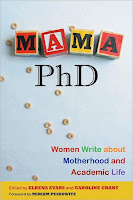
When Mothertalk offered me a chance to read and review Mama PhD, I checked my mailbox eagerly for the advance copy. I knew I could share experiences with the professorial moms with essays in this collection, even though my “campus” is a fourth grade classroom.

Mama, PhD is not gender neutral, nor should it be. The women represented in this collection of essays have faced challenges because of their gender: because they were pregnant, because they were breastfeeding, because they were chief caregivers for their babies and children. The university teaching life is not designed for adaptations and accommodations. Its structure is strict, based on goals and requirements that in many cases were set up decades ago with men in mind.

Four sections sort the essays by focus and theme. “The Conversation” discusses a common dilemma: to have or not to have children. Essays in “That Mommy Thing” gather around balancing motherhood and work, specifically academic work. Part three, “Recovering Academic”, is the shortest of the four with stories of those who have left the fold, while “Momifesto” finishes the book.

The contributors to Mama, PhD write with clarity and passion. Essays are easy to follow, and despite (or perhaps due to) the advanced degrees of the writers, easy to understand. Emotions are never far below the surface; readers will feel the pain and the divisiveness the writers encounter.

The collection of essays relates the personal stories underlying the statistics: families affected by discrimination and bias. This makes reading Mama PhD both difficult and rewarding. I felt for the moms who couldn’t bend their families to meet academia’s rigidity, and I cheered for those who could bend academia to work for their families. I commiserated with those who struggled to find balance and ultimately gave up their careers for their families or decided not to have children in order to maintain their academic careers. Even as I identified with each writer, I found myself glad to be in K-12 public education rather than a higher level of teaching. Union representation helps avoid some of the pitfalls these mothers suffered. I get recognition when I publish, but the publish or perish pressure isn’t in my job description. Teaching effectively can be my focus and my sole accomplishment.

I hope that Mama, PhD will spread the word through the bastions of higher education: policies that marginalize women also marginalize our children, our future, and our present. The glass ceiling is cracking in the business world; the marble ceiling has shattered, but gender equity hasn’t cracked the ivory tower yet.

I received an advance copy of this book to review it for Mothertalk. I do not plan to keep it; I know it’ll make the rounds of my colleagues at school!

Share and Enjoy !

Shares