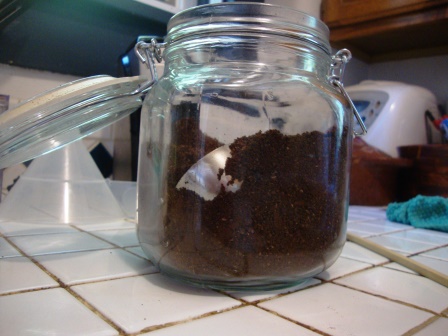
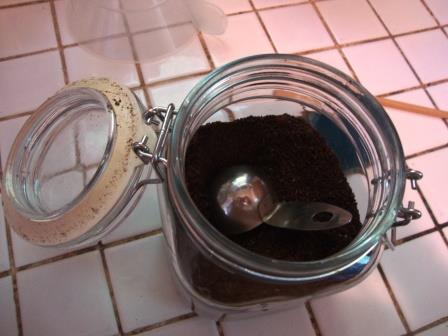
I was grinding coffee beans and discovered the scoop was missing.
Buried, hiding in the coffee grounds.
Think of the possibilities – I might have made unmeasured coffee for days!
An encore post with a few updates – all updates in Italics.
In the midst of Back to School preparations, it seems appropriate to discuss the juggling act we call work-family balance. Sometimes we’re juggling tennis balls, all the same size, all the same weight, all responding the same way. Then someone tosses us a watermelon, and the whole juggling act changes.
Back in my regular classroom days, preparing for school meant something different. Here are a few examples.
I also make a point of spending time outside. It can be as simple as weeding or watering the garden or reading a book on the deck, but getting out is an important ingredient in self-care. Back to school means back to my cubicle and much, much more. The process may look different on the surface, but underneath the hustle and bustle it’s the same: getting ready for a new group of kids and parents.
The flurry of posts and memorials for Robin William’s death has subsided a little. Life goes on and on.
Meanwhile, I keep going to the Farmers’ Markets. The act of going & the act of buying followed by the process of preparing and freezing or canning or cooking… Let’s start over before I create a huge run on sentence.
The act of going to the market is therapeutic. I get to talk to people, ask questions, and interact positively.
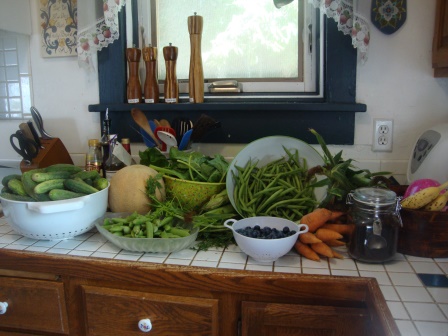
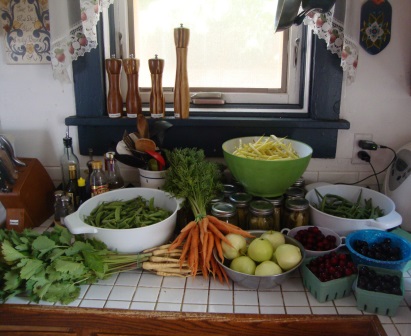
The midweek market is a place filled with happy people! If you look closely at the photo, you’ll see two bunches of carrots. A vendor gave me the second bunch for free because I bought peas and beans from him. He was just being generous and nice – he didn’t know I had a pet rabbit at home waiting for fresh food like this.
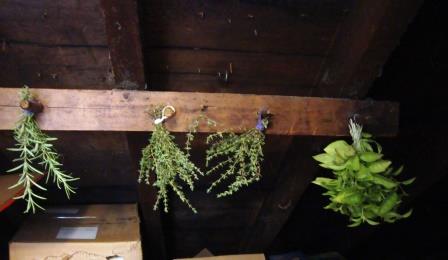
Rosemary, Thyme, and Lemon Basil hang in the attic. They’ll hang from those hooks for at least two weeks until they’re dry or pretty darn close to it. Like gardening, hanging herbs for drying demonstrates a belief in the future. They won’t dry overnight.
Like gardening, drying my own herbs is a process, not a product. So on we go, growing and harvesting and gathering what we’ll need for the future. The future looks good.
Tributes to the great Robin Williams are all over the Interwebs and all over the world. Erika Diamond reprinted a post I contributed a few years ago. Anything I add will echo something said by others – and perhaps that’s one of the reasons so many are speaking up.
From a college friend – Celebrity deaths don’t generally make me cry. I just sobbed over the loss of Robin Williams.
From a teacher and techie friend – I have to turn off Facebook and all social media tonight. This repeating story of Robin Williams being so alone and desolate is absolutely killing me.
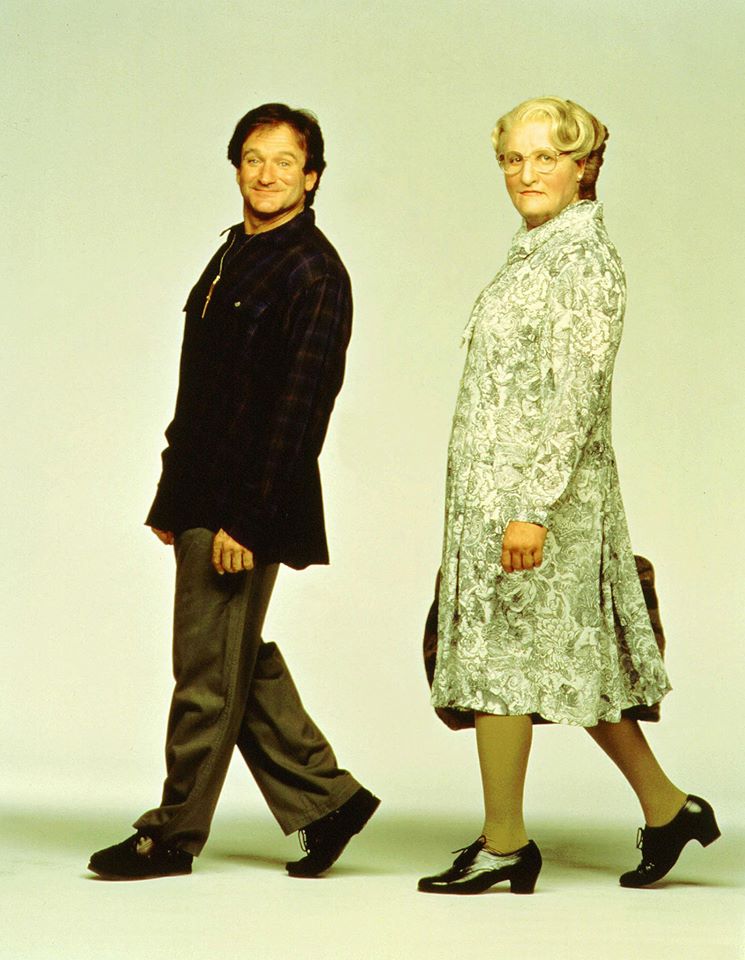
Iphigenia Doubtfire. How much of this was scripted and how much improvised? We may never know. Robin Williams in character within a character – both characters lovable and delightful people.
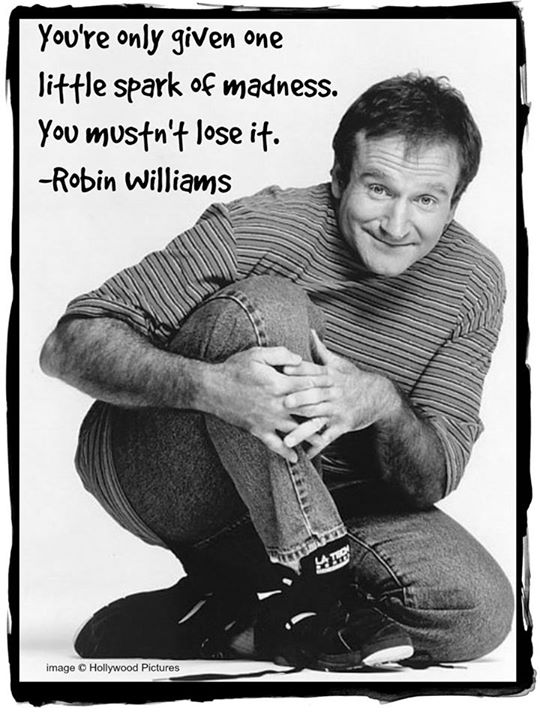
That spark of “madness” – creativity, excitement, humor, brilliance. When I think of Robin Williams and his collective works – I haven’t even seen them all! – I keep coming back to brilliance.
But within that brilliant man was a tortured soul. Depression, an illness made worse by addiction. Yes, I said illness. Depression is an illness that causes great pain. When people experience clinical depression, they are not sad or weak or wimpy. They truly cannot function because of their pain. Recovery can be slow, and it can require medications and therapy and more.
Robin’s legacy includes the manner of his death, but I hope his life is what we remember most. He was a very unique, strong and talented man; a diagnosis of mental illness doesn’t change that.
Rest in peace, Robin Williams. May you finally find the peace you were seeking. You made the world a better place.
Actual Text Messages:
Chuck: There’s a bunny in your garden right now. Want me to chase it away?
Daisy: Yes, please. Take a picture if you can.
Chuck strode out to the garden, phone camera in hand, and got a big surprise.
Chuck: It’s a regular wildlife sanctuary back there. 1 chipmunk, 1 mourning dove, 2 bunnies, small flock of blackbirds. Sorry, no pics.
No wonder I’m hardly getting any beans. Come on, critters. Leave the family vegetables alone!
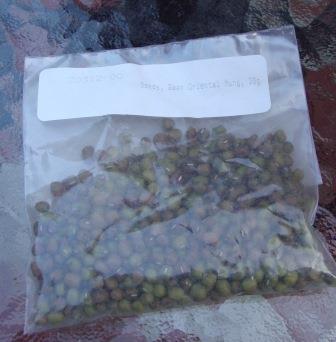
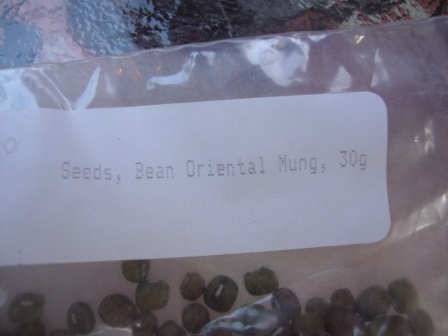
I found this packet when I was cleaning. By its shape and label, I knew I’d saved it from the dumpster when my school adopted a new science curriculum. I cleaned my classroom closets, but I couldn’t bring myself to throw away seeds. Seeds! They might grow! But what kind of seeds was in the packet?
I took a closer look at the label. Then I started doing the math. These seeds are very likely at least ten years old. They’re unlikely to germinate.
Seeds, Bean Oriental Mung, 30g. Not the usual variety for my zone, but I planted them anyway.
My Internet research told me that Oriental Mung beans are an heirloom variety, a non-hybrid bean. The sprouts are delicious in salads, and they’re popular in Europe and India. They don’t resemble any beans I’ve planted, so I am really curious. However, after many years in a classroom closet, I’m not counting on feeding the family on Mung beans despite the quantity in the bag.
I’ll let you know, readers. If something comes up (and doesn’t get eaten by the furry creatures), I’ll show you the results.
While we wait, fellow gardeners and other lovely readers, what kinds of experimental seeds have you planted? Old ones? New ones? Something not usually suited to your zone and climate? Add a comment and share.
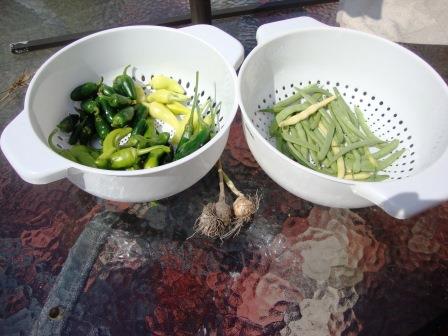
I bought a lot of peppers on Wednesday. Thursday was dill pickle day. I hope the pickles work out this time. I’m close to giving up on dills, at least from my recipe books. I might go to a commercial mix instead.
I had already brought in a meager harvest from the backyard.
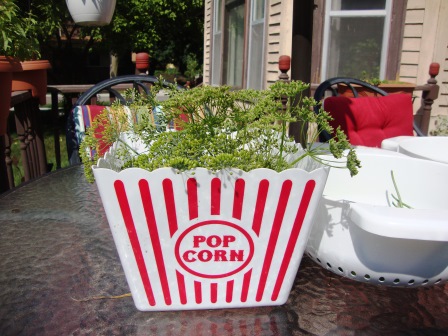
I mentioned pickles earlier. I’d be a little, no, more than a little bit bummed if I didn’t have a way to use at least some of the fresh dill that’s growing in the backyard.
The brine didn’t smell the greatest, so I really don’t know if it worked. Fresh dill and fresh garlic – I hope it all came together. I will have to wait two weeks and then open a jar. Suspense, suspense.
Meanwhile, the Saturday market came by. We took time to listen to some good live music – and I do mean good quality. My fair city plays host to its second annual Mile of Music, and one of the headliners was performing, for free, at the downtown farmers’ market (Hillary Reynolds Band). A little bit down the road we saw one of the lesser known but still awesome bands (Holy Sheboygan) singing and dancing and making people smile. Then we slipped into a coffeehouse and listened to a group of brass players jamming, just jamming.
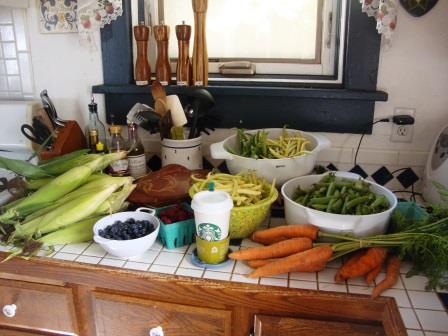
Oh, the market. We brought home all this – plus corn.
My parsnips are not quite ready yet, so we bought some. I also picked up beans, green and yellow, in honor of Packers preseason starting tonight. Packer beans!
There’s my work for the rest of the weekend. Watch Brewers and Packers and prep vegetables for freezing. Ah, summer in Wisconsin.
The big city of Toledo had a disaster of epic proportions recently. The drinking water supply was contaminated with microcystins, a nasty toxin produced by cyanobacteria. Folks with an apocalyptic outlook may be shouting, “Look out! The end of the world is near! The sky is falling! This new bacteria will take over the world!”
Please set aside my sarcasm for a moment. Cyanobacteria is a major issue and a potential problem anywhere there is a large amount of warm, still water. It’s not pollution, per se, but it is dangerous. It’s also not new. As soon as I heard cyanobacteria referred to as “blue-green algae” I flashed back to college and Environmental Science 101. Way back then, I learned that blue-green algae was an invasive species, dangerous because it would take over the ecosystem and force out the native algae and small water animals that provide food for the bigger fish on the food chain. The same fish will not eat blue-green algae because, well, it tastes bad. Even the invasive zebra mussel turns up its nose (figuratively) at blue-green algae, eating other species and leaving more opportunities for the microcystin-producing cyanobacteria.
So, professor, are you proud of me for remembering that? Pat yourself on the back. I also learned quite a bit about water treatment. In my neck of the woods in the Great Lakes region, just like Toledo, Ohio, our local treatment plants have to go to extra lengths to clean and process the water before it goes back into the watershed. The water that enters my home is also treated thoroughly to keep it safe for cooking and drinking.
Blue-green algae and its bacteria do not get filtered out or chemically neutralized, even in the three major stages of water treatment required in the Great Lakes. In fact, boiling will not get rid of it, either. Boiling water makes the toxin stronger.
So here’s the trouble, people. This algae thrives in warm, still water. Climate change has warmed the Great Lakes and made a perfect storm, er, environment for this kind of disaster to happen again and again.
My fair city gets its water not from a Great Lake, but another nearby large body of water. A microcystin water disaster could happen here. Looking ahead, we residents need to consider:
Readers, grab a glass of cool ice water and chime in.
I don’t remember where I read it. A gardening and cooking article stated that rhubarb is past its prime and not much good after July 4th.
My rhubarb didn’t get the message because it’s still growing.
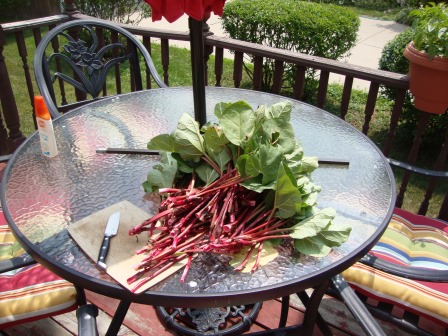
I pulled a few pounds from the freezer to make into sauce. Then I harvested about another pound of the fresh stuff.
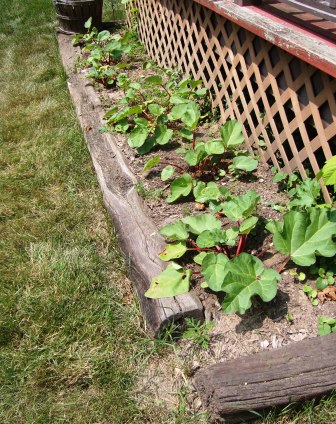
Here’s the fun part. After harvesting a big stack of fresh rhubarb, the remaining rhubarb looks like this.
We had rain yesterday, so the soil and the surrounding grass look much greener today. If this continues, we’ll have apple rhubarb cobbler, crisp, and maybe even rhubarb applesauce in the fall!