Pea Pod Soup – a classic pantry raid

It was a day full of food prep. I’d picked a large amount of rhubarb and slashed the leaves off the stems. While the rhubarb was soaking in the sink to get the dirt off, I’d been shelling peas. I looked at this huge pile of pea pods and thought about the big pile of pods I’d dumped in the compost last week. You can see where I’m heading, can’t you? There had to be another way to use the pea pods after the peas were out.

Soup broth was an option. Pea pods, green onion, garlic scapes – a decent broth, probably. It had potential. But where there was broth, could I also find soup? I did what resourceful cooks do all over the world; I searched the Interwebs. Here’s the result.

Ingredients:

2 lb. fresh, whole pea pods

6 cups water

4 Tablespoons soup base (chicken, beef, or other)

1 small onion, diced (I had a yellow onion on hand)

Garlic Scapes (I used 5)

2 Tablespoons margarine or butter

1 1/2 teaspoons flour

1/2 teaspoon salt

1/4 teaspoon white pepper

1/2 teaspoon sugar

Wash pea pods. Pull off strings.

In medium saucepan, bring water and soup base to a boil. Add pea pods, onion, and garlic scapes. Return to boil; lower heat, simmer for 20 minutes. When pea pods are tender, remove from pan. Push this mix through a food mill or use immersion blender until smooth. True confession: I did both. Mix flour, salt, pepper, and sugar. Melt butter (or margarine) in saucepan. Gradually add flour mixture until thickened. Add soup mix little by little, allowing soup to thicken. Heat through.

Serving options: Add diced ham or chopped bacon; top with sour cream and chives; add saltine crackers; add peas, corn, & carrots during the last ten minutes of cooking.

Amigo ate all of his. Chuck did, too, and proclaimed it “Not bad.” I was rather pleased at how well I raided our pantry and freezer all week long without hitting a grocery store for anything other than milk or bunny food. On the other hand, our next shopping trip is going to carry sticker shock. The kitchen looks like Mother Hubbard’s Cupboard.
Share and Enjoy !

Shares

Prepping for winter – or summer – with rhubarb

I’ve been under the weather for several days, and while I rested and drank fluids, the rhubarb patch grew wild and unruly. When I finally get to it, I will have a lot and I mean A LOT of rhubarb. Frozen rhubarb has good flavor, but the texture isn’t great. I’ll only freeze this bounty if that’s the only option left. Meanwhile, as I was resting, I used the power of the Internet to find more ways to use rhubarb. Here’s a list.

rhubarb jam (of course)

rhubarb jelly (I haven’t really tried jellies yet)

rhubarb cobbler and crisp

rhubarb barbecue sauce (I’ve already put up one batch)

rhubarb juice (now this could be interesting)

I made a trip to the always-fantastic Fleet Farm last night to replace my small hot water bath canner, and as long as I was in the aisle, I grabbed a jelly straining kit. This kit can be part of making jelly rather than jam or straining actual juices from fresh fruit. Rhubarb juice? It’s a possibility.

My thanks to Rhubarb Central for the many, many successful recipes!

Share and Enjoy !

Shares

Banana Bread with Strawberries

Ah, good intentions. The road to you-know-where is paved with good intentions. I planned to share another in-season recipe last week, and the time and the baking got away from me. Here’s a recipe that used to include maraschino cherries. Now it has strawberries, very ripe and juicy, in a classic banana bread.

Banana Bread With Berries

Ingredients:

1/2 cup butter (one stick)

1 cup sugar

2 eggs

1 teaspoon vanilla

3 ripe or very ripe bananas, mashed

1 teaspoon baking soda

1/4 teaspoon salt

2 cups flour (whole wheat pastry flour is my favorite)

1/2 cup chocolate chips

1/2 to 1 cup fresh, ripe strawberries

Directions:

Combine butter, sugar, eggs, vanilla, bananas, baking soda, and salt; mix well. Mix in strawberries and chocolate chips. Add flour; mix well until all is moist. Pour into loaf pan or mini loaf pans (my favorite) or muffin tins. Bake at 350 degrees. Large loaf pans: 50 minutes. Small loaf pans: 35-40 minutes. Muffin tins: 25-30 minutes.

Share and Enjoy !

Shares

Garden: The Good, The Bad, and The Ugly

The good: Garlic is growing well.

The bad: Garlic isn’t full grown yet – no bulbs of multiple cloves.

The ugly: The onions nearby are too small, but seem ripe.

Good: Lettuce is starting to look good!

Bad: Spinach is notably absent.

Ugly: Broccoli has gone AWOL. Bunnies?

Good: We have a family of bunnies in the backyard!

Bad: The bunnies found their way into my peas and beans.

Ugly: We have a family of bunnies in the backyard!

Good: Baby raccoons are cute.

Bad: In a group, raccoons can open the compost bin.

Ugly: The neighborhood raccoon family thinks my compost is lunch.

Good: We have several farmers’ markets in my neck of the woods.

Bad: There’s a bad?

Ugly: A poor garden yield may drive me to the markets more often. More Often? I already go to at least two a week! This could be fun.

Share and Enjoy !

Shares

Fun with Planters

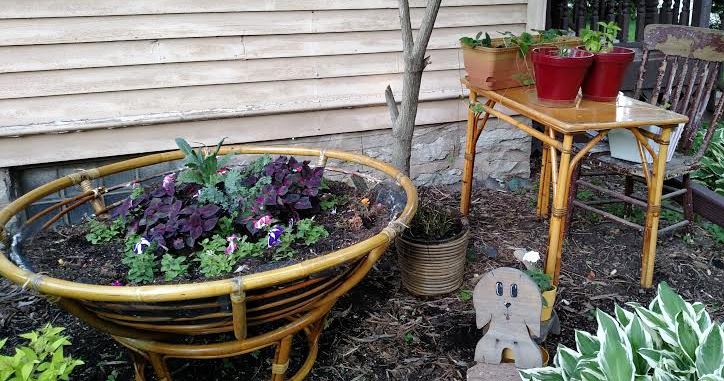
Folks who’ve been reading me for a while might remember that I had a papasan turned planter in my front yard. I now have a new-to-me papasan and a few more goodies.

Fun with flowers!

Fun with flowers!

On the table: a few herbs and an experiment: hula berries.

On the ground: purple hued grasses, hopefully due to grow taller. In front, the puppy with geraniums in place of doggie dishes. The puppy (a thrift store fun find) has faded in the years I’ve had him/her in the rock garden, but it’s always fun to find a pot or two to display in the pup. The other pot on the ground is actually a wooden bucket surrounded with what looks like bamboo or rattan. I picked it up at a rummage sale and thought it might look good next to the papasan. The table, with its rattan trim, came from the same sale.

I think this scene, so to speak, will evolve as the plants grow. I’ll share, I promise!

Share and Enjoy !

Shares

Winter – and Prepping for Winter

I am a public school teacher. My work schedule coincides with the (arguably outdated) agrarian calendar. I start my school year at the end of August, and I end that school year in the beginning of June. I have my Summer “Off” in between.

In an earlier post, I mentioned a quote I’d heard on a fascinating television show called Unplugged Nation. The expert told the people starting their off-grid trial period that “Off the grid, there are two seasons: winter and preparing for winter.” I’m not off grid, but I can see the sense in this statement. Here at the O.K. Chorale, I spend a great deal of my summer prepping for winter, too.

I prep for winter to make my school year easier on me and the family. My workload, like that of teachers everywhere, is much more than the calendar might suggest. By canning and freezing foodstuffs all summer long, I save money, save time, and provide a better quality product for my family. Here’s an example: rhubarb.

Eating in season and eating locally means harvesting and cooking while it’s ripe. I make rhubarb desserts and rhubarb jams and rhubarb barbecue sauce each and every June. Any rhubarb left after that gets diced and stashed in the freezer. If you have a source of rhubarb growing like a weed in or near your home, here’s the rhubarb barbecue sauce recipe with a few Daisy twists.

Ingredients

8-9 cups of chopped rhubarb (approximately 9 pounds)

1 cup chopped sweet onion

1 medium jalapeno pepper, diced and seeded

2 cups brown sugar

3/4 cup honey (local, of course)

3/4 cup apple cider vinegar

1/2 teaspoon ground cinnamon

1/2 teaspoon allspice

1/2 teaspoon ground or crystallized ginger

1/2 teaspoon salt

Directions

Combine all ingredients in a large pan and cook over low-medium heat until mixture comes to a gentle boil. Allow mixture to simmer for 30 minutes, stirring often to prevent sticking and burning. Blend gently with an immersion blender until mixture is smooth.

Ladle sauce into clean, hot pint jars, leaving at least 1/2 inch head space. Add lides and rings on pint jars. Process in a hot water bath for 15 minutes. Remove from heat and allow the jars to rest in the boiling water bath canner for 5 minutes. Remove the jars to a safe place (for example, on a towel at the back of the counter) to cool. Label and store after 12 hours.

To use rhubarb barbecue sauce: pour over a pork or beef roast in a slow cooker. Simmer all day until meat can be shredded with a fork. Serve on buns. Heck, serve any way you wish!

Share and Enjoy !

Shares

Rain Barrels and the Law

The entire West is facing water challenges with a growing population, limited water supplies, and a changing climate.

I saw this in a post discussing a change in Colorado law allowing residents to harvest rainwater. Prior to the law’s passing, setting up rain barrels like mine was illegal. Illegal? Yes. The Water Police would have come over and ordered me to disconnect my big barrels that collect water every time it rains.

At first, it’s illogical, thinking that conserving water would be not only discouraged, but outlawed. The old laws, however, were written for a time when the average citizen didn’t collect and reuse water. The old laws managed water rights for farmers and ranchers, people making their living off the land. The original legislation made sure the folks who needed large quantities of water for their crops and their livestock would have it and not have to fight their neighbors over every drop.

But now, in an era where individuals are concerned about water – saving water, reusing water, even treating water for household use – the old laws no longer make sense.

I’m fortunate to live in a region where water is relatively plentiful and my rain barrels are encouraged, not outlawed. It’s still important to conserve. I’m glad it’s spring, at long last, and I’m glad to see rain in the forecast sometime this week. I’ve been planting and watering, leaving the barrels ready for refilling.

Share and Enjoy !

Shares

The Garden Begins!

The magic date for planting in my zone usually falls on Memorial Day. The forecast has been cooperative lately, so I started quite a bit already. I’m waiting a few more days with the tomatoes and peppers; they didn’t start well from seed this year. Better soil or better starter pots might be the answer – next year. For now, they get a little more time in pots on the deck before I measure the grid and insert the seedlings into the soil.

Square foot gardening gives me a lot of food in a relatively small space. So far, I’ve planted lettuces, spinach, parsley, peas, broccoli, and root crops: carrots, parsnips, radishes, turnips. It sounds like a lot – and if all of it comes up, there will be a lot of fresh vegetables around the O.K. Chorale.

The plot behind the new garage is restarting, really. I have a small parsley bed back there (bunny food!), and the raspberries are coming back nicely. In a year or two, I’ll have a significant raspberry patch again. I(hopefully!) protect the seedlings from the wild bunnies.

The onions and garlic that I planted last fall are coming up well. I finally figured out which was which, too. The garlic is almost ready to harvest. I’ll definitely do this again next fall: plant the bulbs, and then let them lie dormant during the winter and grow as soon as the ground thaws in the spring.

I just heard a grizzled old off-grid guy on television say, “When you live this isolated and off grid, there are two seasons: winter and getting ready for winter.” Here in the city neighborhoods, we do some of that preparation. I don’t need to chop wood, but I do grow and can and freeze a lot of goodies during the “Getting ready for winter” season. The big difference here is how relaxing and enjoyable the prep time can be.

Pictures, you ask? Later. I promise.

Share and Enjoy !

Shares

Garden Progress

Done: lettuce planted, parsley planted, zucchini planted. Root crops (carrots, parsnips, radishes, a few turnips) planted.

In seedling form: broccoli, tomatoes, cherry tomatoes, peppers, marigolds.

Still on the to-do list: put fence up, plant beans and peas, transplant seedlings.

Is that all? Not by a long shot, I’m sure. Give me time, I’ll think of more.

Preparing for the landscapers who are coming to replace my lawn with perennial flowers has its own to-do list. Let’s see: it starts with Dig Up Daffodil and Tulip bulbs. What am I doing inside watching DIY TV? There’s a lot to do outside!

Share and Enjoy !

Shares

Volunteers – not grass roots

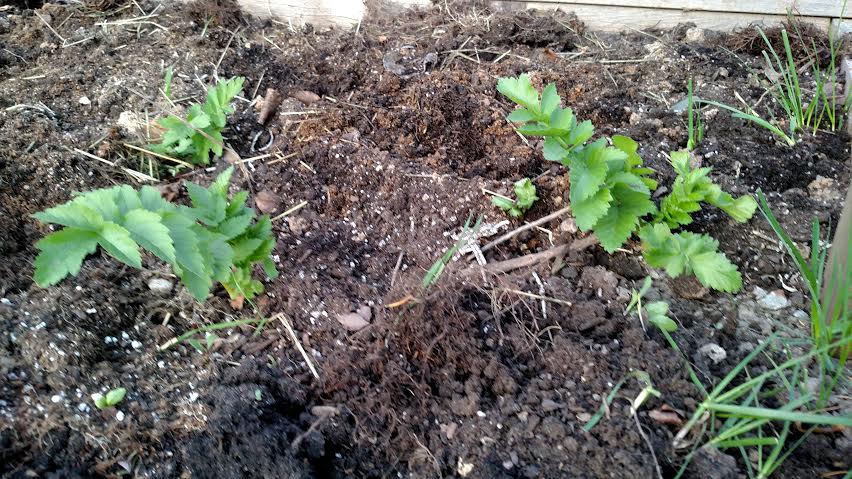
If you look closely, you can see some stubborn grass roots in the foreground. The close-up is a volunteer that sprouted this spring. I haven’t planted anything in this area – yet.


This looks familiar.

This looks familiar.

I kept thinking, “They’re not carrots. They’re not radishes. Parsnips?”

I did a little research online. The foliage certainly looks like parsnips. But how?

I planted carrots and parsnips in that area last year. Most likely, a handful of seeds didn’t germinate last spring. After hibernating through a warm and wet winter, the seeds were ready to burst.

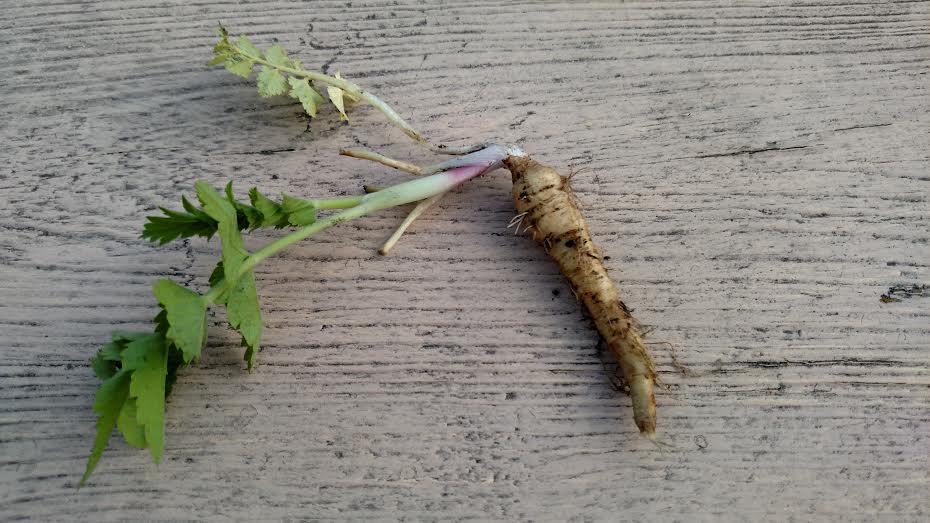
And burst they did. Here’s one I pulled up to test the theory.

Parsnip. Indeed.

Parsnip. Indeed.

I’m planning to plant tomatoes there. Supposedly tomatoes and carrots are good companions; maybe parsnips will do well with my tomatoes, too.


Share and Enjoy !

Shares