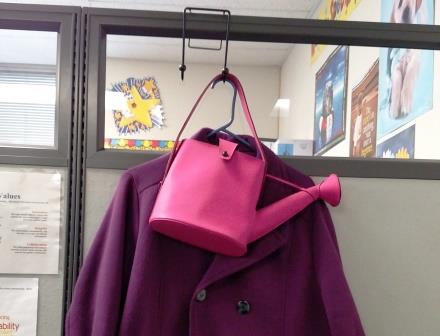
Daisy’s traveling purse

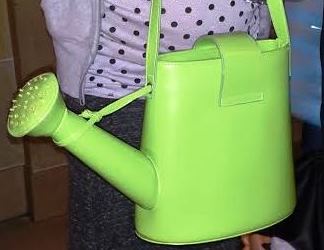
The short version of the story: I saw this.

The green option.

The green option.

I said to myself, “Oh, self, that is amazing. Can I find one like it?”

So I did.

Pink Purse hanging in cubicle

Pink Purse hanging in cubicle

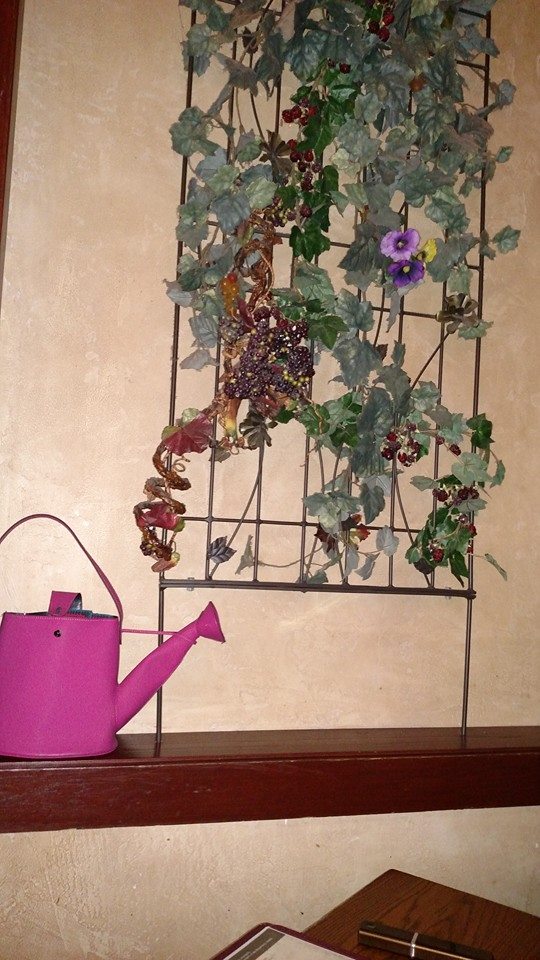
Tonight, we went out to a local restaurant for dinner. I set my purse on a shelf next to the table. It seemed to work.

The waiter did a double take.

The waiter did a double take.

So, friends in the blogosphere, expect more adventures of the Pink Watering Can Purse. I predict more adventures like this one.

Share and Enjoy !

Shares

What Not to Eat

I have felt uneasy about lawn services for a long time. We cut back on ours, but Chuck wasn’t quite ready to give it up altogether. A post from the Smart Ingredients Blog arrived in my inbox, and it made a lot of sense. I really don’t want those pesticides seeping into the soil near my garden, no matter how seldom.

In the post called Intentional Eating, the blogger discussed ingredients that are harmful and hidden in processed foods. Here’s a sampler.

  • MSG – Can causes weight gain, brain damage, depression, headaches. Found in seasonings, broths and packaged foods.
  • Aspartame – A carcinogen. Found in diet foods and gum.
  • High-fructose Corn Syrup (HFCS) Can cause weight gain, tissue damage, diabetes. Found in sweets, breads, salad dressings, condiments and more.
  • Food dyes – Can cause hyperactivity. Found in many items, the not-so obvious ones include kids’ medicines, vitamins, pickles, muffins, salmon.

Her list was longer, but you get the idea. The solution? We’re doing a lot of it already, but I know my family could get better. Suggestions start with:

  • Change something. Small steps lead to better lifetime habits.
  • Make your own. Get in your kitchen and start making cleaner foods for your family.
  • Read labels. You may be surprised – even shocked! – at what’s in commonly purchased foods.

To read the entire post about Intentional Eating, go to the Organizing Dinner Blog.

This is not a sponsored post. It just reinforced what I’d been thinking and gave some specific examples. Readers, what else do you do to cut out the chemicals in your family’s foods?

Share and Enjoy !

Shares

Seedlings

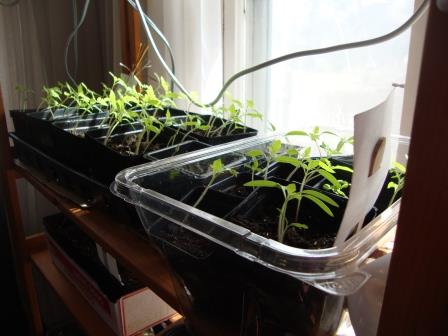
They’re here! The seeds are coming up. They’re kind of spindly, though, and they’re stretching their little necks – er, stems – toward the wee bit of sunshine that comes through the windows.

Okay, everybody, lean!

Okay, everybody, lean!

I set them outside a few days ago when the temperatures got near 60. Then I brought them inside to soak in the heat of the grow lights. If I can do that a few more times, it’ll help the spindly stems strengthen. Say that ten times fast, if you can.

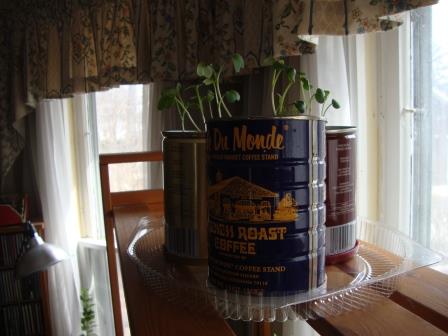
I have herbs that wintered indoors, tomatoes, peppers, and — radishes.

Radishes in coffee cans - Chuck's suggestion.

Radishes in coffee cans – Chuck’s suggestion.

We’ll see how they all grow. Most years, I put the pedal to the metal, er, the seedlings in the soil at the end of May. These little tiny starters should be ready by them.

Share and Enjoy !

Shares

Doomsday? Not so fast.

I blog about life, my life, and that includes a lot of gardening, canning, and otherwise preserving summer’s fresh bounty for the long winter months. Every now and then, I get comments or emails from so-called Doomsday Prepper groups. These are people who share my fascination with self-sufficiency, but for different reasons. Many Prepper groups expect the world as we know it to end soon and without warning. Their fears range from the massive changes due to global warming to a complete collapse of our government.

I’m not a doomsday type of person, but I do like to stock up when the veggies are fresh and I have time to can. This stock-up process gives us good quality jams and pickles and more goodies in the pantry and locally grown vegetables in the freezer. We don’t do it to prepare for some mythical End of the World, but it does ease our winter grocery budget and bring a taste of summer to the table when there is snow on the ground.

So when I started reading Michael Perry’s book Coop, I could identify with his statement in the Prologue.

Whether through prescience or too much nervous reading, we have developed a low-key doomsday mindset regarding the imminent future, and believe the time has come to store up some potatoes and teach the young’uns how to forage.

He hit it right on the head. Maybe I should stop reading so much dystopian fiction. Or maybe I should just water the seedlings, spread the compost, and always remember to vote.

Share and Enjoy !

Shares

Celery?

My wonderful sister-in-law has started getting organic produce delivered to her home regularly. She now has a dilemma: what to do with all the celery. Since she didn’t take my suggestion and get a pet rabbit, I’ve decided to come up with a list. Friends, family, and Internet acquaintances, please chime in.

  • Ants on a log: celery sticks with peanut butter and raisins
  • Variation on ants on a log: celery sticks with Nutella
  • Add diced celery to: casseroles, soups, salads, baked beans,
  • Use it as a garnish – to almost anything, not just Bloody Mary or V8.

I ran a search for “recipes with celery” and found lots of suggestions.

  • Apple-celery salad, anyone?
  • Almond baked celery
  • Sweet and sour celery
  • Celery and rice
  • Stuffed celery
  • Celery sauce…the list is endless. And don’t for get celery root! That’s an entirely different flavor.

Then there are the other uses. Slice a long, leafy stalk halfway up – lengthwise (does that make sense? I really need a visual.) It’ll have two “legs” that come together at the top. Set each end in a separate glass of water. Add red food coloring to one glass and blue to the other, and let my darling young niece learn about capillary action.

Does that help, SIL? Readers, give her a hand. What else can you do with celery?

Share and Enjoy !

Shares

Tools – Some Things Stay the Same

This encore post covers what I’m doing now. The only change is this: we emptied the garage completely because the garage is going down and getting replaced soon. All of my tools, old and new, are in the basement for now. The rest? Everything old is new again.

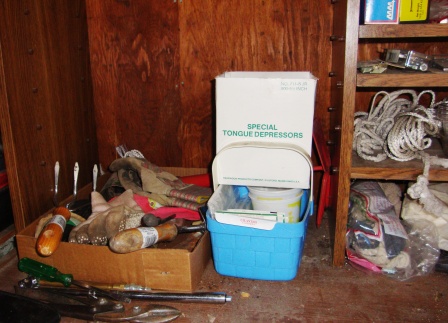
Tools! I’ve been pulling my gardening supplies and tools out of the garage more and more often. Let’s see: a trowel or two, several pairs of gloves (each fits a particular task – all are dirt covered), blue basket of seeds, tongue depressors —

Tongue depressors?

Teachers use tongue depressors in all sorts of ways. This box came from a retired teacher’s garage sale and served my fourth graders for four years. When I left my classroom behind for a cubicle, I brought the remaining sticks home. They’re biodegradable, easy to use, and a perfect size on which to write. Good thing I had a lot left – look at these tomato seedlings!
 

And if you had any doubt about the effectiveness of my little wooden supplies, take a closer look.

They’ll go into the garden soil near each plant so I know what’s there until the plant grows up and shows its true colors, er, fruits.

Share and Enjoy !

Shares

Winter. Such a Long, Long Winter.

Winter always feels long toward the end of February. No matter when the first snowfall came, I’m always ready to look for spring right about now. I don’t believe that goofy furry faced groundhog, either. In the cold Midwest, not far from an NFL stadium nicknamed the Frozen Tundra, we always have at least six more weeks of winter after the groundhog “speaks”.

The question remains, then, what do we do about it? Some people travel to warm places. Some of us stay here and face the thermometer. Some of my colleagues share links to “Frozen Office Syndrome” and “21 Products You Need to Stay Warm in the Office“. Each day we pull on our fingerless gloves, drape blankets on our laps or over our shoulders – or both – boot up our computers and get to work.

And then it’s time to come home. Home, sweet home, where the furnace is pumping and the crock pot is simmering with comfort food like chicken dumpling soup or lamb stew with plums. We can’t quite forget that baby, it’s cold outside.

Really, what does a resident of Wisconsin do when there are still at least six weeks of winter? If you’re a die hard gardener like me, you might be starting seeds right about now. I braved the cold (4 degrees above zero, people, and that’s before the wind chill) and brought home two big bags of potting soil. I took inventory of my seeds and decided what I still needed to buy. I spent almost $50 on soil, seeds, and a few random snacks and a big roll of packing tape (for wrapping books to swap), presented my $10 off coupon, handed over my own shopping bag, and focused forward. Spring will come, and I will be ready!

I can hope and plan and even dream a little. The grow lights will keep the little seedlings warm, and the Muk Luks slippers will keep me cozy. Muk Luks? Oh, that’s another story.
Share and Enjoy !

Shares

Save No Money at the Big Box Store

We needed a shed – a big box, if you will. We’d somehow missed the seasonal sales, so it took a good search to find the best deal on the best size shed. Chuck found one at a store that doesn’t usually attract our attention.

“With the discount, it’s the right price for exactly the right size, and we can have it delivered.”

“Okay.”

“Well, it’s not really a discount. It’s a rebate.”

“Then we’ll be sure to do the paperwork.”

“And the rebate is in the form of a store credit gift card.”

“If that’s what it is, that’s what it is. I’ll apply it toward garden supplies in the spring.”

We came to regret it. The delivery ran into snags and got here several days later than expected, which gave Chuck the job of assembling it outside in nasty fall-hints-at-winter weather. Then we all shared the same virus, and not even rebate paperwork could pull me away from the bucket next to my bed. Those were small inconveniences, though. The final word, however, was this: the email with the rebate instructions came after the rebate deadline.

Now we’re shaking our heads, saying we knew better, but we didn’t act on our past experience. It’s highly doubtful that we’ll go back to this store, rebate or no rebate. If we miss the sales, we’ll go to the store that has everything and more and a big orange silo in the middle.

Share and Enjoy !

Shares

Is the Soup Organic?

It was a simple question. I’d brought in my latest minestrone for Soup Day at the Office. I invited a couple of coworkers who didn’t normally partake. They were friends, colleagues, and of course they deserved a bowl of Daisy’ best!

And then it came up: the question. “Are all the ingredients organic?”

I had to say no. And of course, I had to start thinking. My soup offering was made from scratch. But organic? Let’s see.

Broth – mainly a beef broth from my freezer. No preservatives, just bones boiled with a few scraps of onion and maybe peppers, too. But organic? I doubt that the meat was organic, and the onion and peppers probably weren’t organic, either.

Minestrone is all about vegetables. It’s February. The peas and corn, out of my freezer, came from the farmers’ market. The handful of yellow beans were from my garden. A little tomato sauce – canned from fresh-grown tomatoes in my own backyard. And then – carrots, onion, a little celery, all from the grocery store, none organic.

In July or August, that soup would have a lot more organic to it. Maybe that’s my next move: grow more, preserve more, and start making a point of buying organic more often.

Now if only the snow would melt.

Share and Enjoy !

Shares

Almost an encore

The cold weather and snow storms got me thinking about spring. Of course I thought about planting. Doesn’t everybody?

I had some help preparing the garden plot last year. Here’s one of my helpers with her pink shovel, a shovel that belonged to La Petite when she was about this size.

Have shovel, will travel!

Have shovel, will travel!

We put her in charge of uprooting the dandelions and feeding some of them to Buttercup. Bunny was very happy.

Share and Enjoy !

Shares