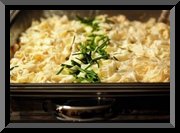
>I had good intentions of getting before, during, and after pictures. Business was booming as we opened, however, and I was too busy to reach for the camera. Note to self: take pictures early or the night before the sale. Later in the morning the tool table looked like this.
Tag Archives: it’s the economy
>Questions on the eve of a family rummage sale
>Where on earth did all this stuff come from? Will we ever, ever be able to park our cars in the garage again?
Tools, familiar and not so familiar. What size is this bedframe? Why, oh why, did the in-laws keep so many of these in their shed for so many years when they weren’t using them at all? Will anyone actually buy them? Did we price them low enough?
>Recession gardening, Victory Gardens, and Family Tales
>Last season, the news was full of a new term: Recession Gardens. Folks across the U.S.A. were figuring out what we backyard gardeners already knew: fresh home grown veggies are inexpensive and delicious, with less risk of contamination in the harvest or shipping process. Whether I call it recession garden or kitchen garden, this plot of soil will produce the produce my family loves.
Mother-In-Law recently shared a story about her childhood in Milwaukee. MIL spent her formative years on Milwaukee’s north side, around 41st Street between Silver Spring and Capitol Drive. They lived in a small house, and her father bought the two lots on either side when the owners were in arrears on their taxes. “He got them cheap!” she told Husband. Using the extra lots, the family started what she refers to as their Victory Farm in the city of Milwaukee.
They grew vegetables, they raised chickens (she remembers having about 500!), and near the back of their extended lots they grew the grain to feed the fowl. She, as the only daughter, canned their produce as it ripened. When they had more than the family needed, she would work out trades with the neighbors and/or the small grocers in the neighborhood. She remembers trading berries she’d canned for a crate of peaches. As she canned the peaches, she threw a few peach pits in the backyard, and (you guessed it!) ended up with two peach trees. As these hardy cold-weather trees began to bear fruit, the family had one more crop of their own.
I’ve read that at one time Victory Gardens produced 40% of the nation’s food supply. That figure seemed rather high at first glance, but if a lot of city families did what my MIL’s family did, 40% could be a realistic estimate. MIL told Husband that the family started their Victory Farmette before WWII, toward the end of the Great Depression. It must have been fairly well established by the time the Victory Garden became the trendy thing to do.
My backyard plot – call it Kitchen Garden, Recession Garden, or just my patch of dirt – won’t come near Victory Garden quantities. I can only hope it’ll grow stories that I can tell my kids when they have kids of their own. Maybe they’ll talk about how their mother liked to play in the dirt all summer long and added home grown spinach to everything they ate!
Enjoy the home-grown and local food, everyone, and keep telling the family tales. That’s the kind of growth and stimulus our country will always need.
This is a compilation of two earlier posts, reworked and revised for Scribbit’s June Write-Away Contest. Her theme is “Food.” Win or lose, growing some of our own food is important to me, so this post is a good fit. Deadline for entries is Sunday, June 21 at midnight Alaska time.
>Not more with less, but more with the existing garden resources.
>Doing more with less in a school setting can lead to burnout. In the garden, I’m focusing on doing more with what I already have available instead of doing more with less. My goal: feel productive, not overwhelmed.
Compost, of course. I’m adding paper this year, that which can not be recycled due to food residues. Husband puts in the grass clippings, I add some of the soiled bunny litter box contents, and of course any suitable kitchen scraps. The grass clippings keep the temperature hot and help decompose the rest.
The rain barrel is already a success. I use it to rinse the litter boxes, rinse the emptied compost bucket, water the rhubarb, and more. We’ve only used the outside tap when we need the high water pressure for washing the lawnmower.
Tomatoes have new supports, supports that I already owned. The bean trellis is the same one I’ve used for years. I’m using a few old tomato cages for pepper plants and snap peas, and I think I’ll sell the rest at our June rummage sale. I really have too many. Hmmm…if La Petite would wash and paint them, maybe they’d be worth a little more. Maybe?
All this productivity with minimal investment helps my morale. I feel frugal for reusing and repurposing. I feel accomplished for getting the garden in and tending it. I feel thorough for doing my research and nurturing the tomatoes to do so well.
But lock your doors; if my zucchini is too prolific, I’ll have to get creative in giving it away.
>Going green means staying green
>”GO GREEN!” screamed the email from the wellness coordinator. I joined in, of course, and then laughed when I saw the program’s suggestions. It’s great for beginners, but for an eco-conscious family like mine, most of the ideas were habits already built into our everyday lives.
Green sometimes means an investment that will pay off later. Cloth napkins, for example, cost me a few bucks (I’m a bargain shopper, so I do mean only a few). Since I bought the first batch, however, we haven’t purchased paper napkins at all.
Dryer balls cost a little, and I do mean a little. I spent less for the pair than I normally do for a bottle of Downy, and I expect them to last longer. Less $$, fewer chemicals, and it’s a winner with me! I’ve heard that an old pair of tennis balls will have the same effect. I plan to keep my eyes open at rummage sales and try this technique, re-using and re-purposing: both frugal and green.
As I updated my Go Green participation record, I noticed that the one-point activities were second nature. Recycling at home and at work, using a reusable lunch bag and a washable coffee mug at work, printing/ copying on both sides of the paper; I do these as a matter of course. The high-point earners, the permanent changes, are either things we already did or a little less common. Start a compost pile, install a programmable thermostat, insulate the water heater: these are all 4 point activities, investments we made years ago. Install aerators on the faucets, low-flow showerheads and low-flow toilets, vote for a green candidate: well, we do those 3-pointers, too. We can do better, though: we could easily refurbish furniture, change to a few more CFL bulbs, and lower the water-heater temperature.
Go Green’s list suggests caulking or weatherstripping windows. We’re taking that a major step farther by replacing several old windows that may be original to the house (c. 1890). They’re lovely, but leaky. The investment in new windows will be a good one. I gulped and gasped when I saw the bill, but in reality, it’s reasonable. It will pay for itself within a few years in energy savings. We may get a rebate for energy efficiency, too, if Husband’s research is correct. As for comfort, better windows can only improve the indoor climate. No more drafty kitchen when the wind blows! The back hallway/ pantry might not be cold enough for a psuedo-root cellar any more! Oh, wait, maybe that’s a small disadvantage….
The Go Green program limits participants by not allowing any one activity more than once in a given day. Even with few four-point pieces, I’m easily reaching the maximum nine points each day. That tells me that integrating small habits can be a big deal. Yes, Kermit, it is easy being green.
>Does Sears know it’s Earth Week?
>The Virtual Great American Bake Sale
>
In real life, bake sales bring in minimal profits. Sometimes a non-bake sale brings in a better total. Instead of baking, people donate the amount they would have spent on their donated baked goods. Typically, any fundraiser is most successful if it can target an audience that isn’t already paying for the service. For example, a child care center selling t-shirts will only take in money out of those parents already paying tuition. But Girl Scouts selling cookies will sell to people who are not paying dues to the troop, and therefore will bring in a fair amount of usable funds.
When I heard about the Great American Bake Sale, I read through the information and decided it was worthwhile. I gave them my Mosaic Muffins. Adapted from another recipe to use my own garden produce, these muffins fit today’s sensibilities by using homegrown ingredients and having a fair amount of nutrition. They taste so great that your family doesn’t need to know they’re good for you.
Money raised from the Great American Bake Sale will benefit Share Our Strength, a group working to eliminate child hunger in America. As unemployment increases (it’s at a 25-year high right now), families have less money, and children have fewer regular meals. I see this every day in the students who concentrate better after lunch because they didn’t eat breakfast, the kids lined up for free breakfast at school because they didn’t have much to eat the night before, those who enviously eye the healthy snacks their wealthier friends brought from home. If children are going hungry in my relatively stable community, there are thousands worse off in other parts of the U.S. Share Our Strength spends a lot of time and money supporting after-school and summer meal programs.
You can help by spreading the word, making a donation to Share our Strength, or ordering the ebook. There’s a button on the sidebar for the VGABS e-cookbook. Remember, if my muffins are in it, it must be good! I can’t wait to see the other recipes.
Most of all, I’m happy to spread the word and increase contributions to help minimize – better yet, end – childhood hunger.
The Complete 2009 VGABS Recipes Ebook


Features all 170 of the submitted recipes. Many of the recipes include pictures.
On the checkout page, manually change the amount (USD) field to your donation amount.
Shopping cart courtesy of E-Junkie.
Because we know file size may be an issue for some, the below ebooks have split the 170 recipes into 4 categorized ebooks so that you can choose just 1 or 2 of your favorites, if you’d prefer. Just like for the Complete ebook, many of these recipes include pictures. And again, they are available for purchase based on any donation amount of the buyer’s choosing.
Muffins & Breads
Features 24 recipes.
On the checkout page, manually change the amount (USD) field to your donation amount.
Cookies, Candy, Cakes, Bars & Brownies
Features 50 recipes.
On the checkout page, manually change the amount (USD) field to your donation amount.
Desserts
Features 49 recipes.
On the checkout page, manually change the amount (USD) field to your donation amount.
Beyond Baked Goods (Appetizers, Breakfast, Main Dishes, etc.)
Features 47 recipes.
On the checkout page, manually change the amount (USD) field to your donation amount.
This is not a paid post. I’m merely helping spread the word about a cause worthy of your attention and support.
>A Victory Garden in the Family History
>Husband took a day trip last weekend to a nearby city in order to photograph gravestones for his family history web site. He invited me along; I declined, preferring to start readying my garden. He invited Amigo; Amigo wanted to stay home and start his spring break by relaxing. Husband then called his mom and dad. They initially said yes, and then his dad backed out in favor of a nap or two.
On the road between here and there, Mother-In-Law talked about her childhood in Milwaukee. She meant the big city itself, not a suburb. MIL spent her formative years on Milwaukee’s north side, around 41st Street between Silver Spring and Capitol Drive. They lived in a small house, and her father bought the two lots on either side when the owners were in arrears on their taxes. “He got them cheap!” as she told Husband. Using the extra lots, the family started what she refers to as their Victory Farm in the sity of Milwaukee.
They grew vegetables, they raised chickens (she remembers somewhere in the range of 500!), and near the back of their lot, they grew the grain to feed the chicks. She, as the only daughter, canned the blueberries and raspberries as they ripened. When they had more than they needed, she would work out trades with the neighbors and/or the small grocers in the neighborhood. She remembers trading berries she’d canned for a box (crate? case?) of peaches. She canned the peaches and started the cycle all over again. She threw a few peach pits in the backyard, and lo and behold, two peach trees came up. As they began to bear fruit, the family didn’t need to buy or trade for peaches any more, either. The peach trees were a hardy variety, a Rocky Mountain type, so they held up well in this cold Wisconsin weather.
I’ve read that at one time Victory Gardens produced 40% of the nation’s food supply. That figure sounded awfully high to me, but if a lot of city families did what my MIL’s family did, 40% becomes more believable. MIL told Husband that the family started their Victory Farmette just before World War II. It must have been fairly well established by the time the Victory Garden became the trendy thing to do.
My backyard plot – call it Kitchen Garden, Recession Garden, or just my patch of dirt – won’t come near Victory Garden quantities. I can only hope it’ll grow stories that I can tell my kids when they have kids of their own. Maybe they’ll talk about how their mother liked to play in the dirt all summer long and added home grown spinach to everything they ate!
Happy Love Thursday, everyone, and keep telling the family tales. That’s the kind of growth our country will always need.
>Avoiding Mother Hubbard Syndrome
>I read a lot of news, and a piece that caught my eye lately was an article on people stocking their pantries with canned goods. Even as they buy seeds for their Recession Gardens, people who are nervous about possible layoffs are preparing to avoid Mother Hubbard Syndrome: the fear of “When she got there, the cupboard was bare, and so her poor dog had none.” No one wants the dog or the kids or the family as a whole to go without, so they’re buying foods that will last. If the family loses a paycheck unexpectedly, they’ll still be able to feed themselves for a while if the pantry is full.
I’m not sure if we got caught up in the widespread Mother Hubbard Syndrome or just lost track of our grocery lists, but the freezer in the basement was so full we couldn’t put another thing in it. I haven’t been formally Meal Planning in the way of so many frugal bloggers, but this week it helped keep us on track and use up some of what’s in the fridge and freezer. Sunday night I made a homemade pizza with spaghetti sauce, red and green peppers, & pepperoni from the freezer. Monday was teriyaki beef, Husband’s Chinese noodles (I’ll post his recipe soon), and steamed cauliflower. Tuesday: roaster chickens were on sale last weekend, so we bought one. No room in the freezer, so it goes on the menu ASAP. In the empty the freezer project, frozen veggies will join the chicken on the table. Leftovers will end up in soup — soup to cook this week, as there’s no room in the freezer for extra stock or meat scraps!
Next: there was a frozen container of tomato soup (from last fall’s garden) that’ll join leftover sloppy joe mix in a crockpot chili on Thursday.
Oops, missed a day. What to do today, Wednesday? Tacos! If we have any leftover meat, it can join the chili.
Friday? Friday we’ll be on the road to pick up La Petite which makes it another good crockpot day: time for the leftover chicken to surface in a soup. We’ll come home to the aroma of homemade soup and (if I’m on top of things) bread in the bread machine. What a great welcome for all of us!
It’s a great feeling to feed my family and still have food to spare. Many families aren’t so lucky. Please consider buying a little extra for your local pantry. Together, we can weather this recession by helping each other out.
>Weekend Update, Spring Break R & R, Daisy style
>Saturday summary:
Relaxation: slept in until almost 7. If you’re thinking “Only 7?” I need to remind you that I get up at 5:30 AM on school days. This means an extra hour and a half of rest.
Schoolwork: checked school email. Nothing urgent, deleted a bit of junk. Now I can let that rest for the remainder of break.
Housework:
- Laundry. Lots of it. Typical Saturday in that way.
- Cleaned bunny’s litter box and cage (see garden, below).
Garden:
- Dumped compostable litter (very dirty) into garden. Spread it out on top of soiled paper, unrecyclable. By the time I plant in late May, this “garbage” will either decompose or be tilled into the soil.
- Arranged overflow pipe from rain barrel so that any additional water goes directly into the garden plot. Used water from the rain barrel to rinse bunny’s litter box.
Despite accomplishing very little in the garden itself, I am feeling very green!
Reading material: finished (and enjoyed) The Eyre Affair. Now I’ll start a few of the books I picked up at the local independent bookstore yesterday. One side-benefit to using Paperbackswap.com: I know I spend less on books than I used to spend, and therefore I can buy a few new ones now and then. I’ll keep those that warrant a reread, and I’ll post the rest on PBS. With those credits, I’ll get more books for me and audio books for Amigo. All that and stimulating the local economy, too — must sit down and take a breath.